

Industrial facilities face a range of safety risks tied directly to how well their spaces are cleaned and maintained. Dust accumulation, chemical residue on floors, airborne contaminants, and neglected high-traffic zones create conditions that lead to injuries, regulatory citations, and unplanned production shutdowns.
 Stathakis delivers fully managed industrial cleaning solutions that address these risks at their source, keeping your facility compliant and your workforce protected.
This article covers the specific safety risks that inadequate cleaning creates in manufacturing and industrial environments. Each section identifies a distinct hazard and offers operational guidance you can apply to your own facility.
Key Takeaways: Industrial Cleaning Safety Risks
- Accumulated dust and airborne particles in industrial spaces create respiratory hazards and equipment damage over time.
- Chemical residue left on floors and machinery increases the risk of burns, slips, and regulatory violations.
- Slip-and-fall incidents remain one of the most common and preventable injuries in manufacturing facilities today.
- Stathakis uses CIMS-GB certified processes to reduce compliance gaps tied to cleaning and sanitation protocols.
- Neglected high-traffic zones accelerate floor degradation, creating serious trip hazards and costly surface replacement cycles.
Safety Risks Tied to Poor Industrial Cleaning Practices
1. Airborne Dust and Particulate Exposure
Manufacturing processes generate fine dust from metal grinding, woodworking, and material handling operations. When cleaning schedules fail to remove this buildup, particles become airborne and enter the breathing zone of your production staff and cleaning technicians.
Establish a dust-control program based on the materials present, exposure risks, and site-specific safety procedures. Select collection equipment and filtration appropriate to the hazard, and schedule cleaning of overhead surfaces and machinery housings. HEPA filtration alone does not establish that a vacuum is suitable for combustible dust; equipment must be appropriate for the dust and location. A structured industrial cleaning program helps control particulate accumulation before it reaches hazardous levels.
2. Chemical Residue on Floors and Equipment
Solvents, lubricants, and cleaning agents leave behind residue that can cause chemical burns, skin irritation, and slip hazards. In facilities where multiple chemicals are used across production lines, residue buildup on floors and equipment creates compounding risks that standard mopping does not address.
A qualified cleaning partner must understand chemical compatibility and select compatible products and methods using safety data sheets, product labels, and your facility's approved procedures. Stathakis uses green cleaning protocols with documented chemical handling procedures to remove residue while managing chemical exposure and compatibility risks.
3. Slip, Trip, and Fall Hazards
Slips, trips, and falls account for a significant percentage of workplace injuries across all industries, and the risk multiplies in facilities with wet floors, oil spills, and uneven surfaces. OSHA housekeeping and floor-safety requirements call for clean, orderly walking-working surfaces, floors kept dry to the extent feasible, and hazards such as leaks and spills to be addressed.
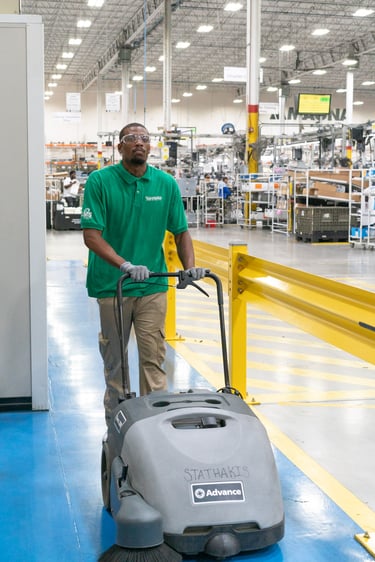
Effective slip-and-fall prevention requires more than reactive cleanup. It demands a proactive floor care program that includes daily scrubbing, immediate spill response, and scheduled maintenance matched to the floor material, manufacturer guidance, and site-specific traction requirements.
4. Cross-Contamination Between Production Zones
In facilities that manufacture food, pharmaceuticals, or precision components, cleaning tools and methods used in one production zone can introduce contaminants to another. Shared mops, rags, and buckets are a documented source of microbial transfer between areas with different cleanliness classifications.
Stathakis addresses this risk through color-coded microfiber protocols that assign dedicated cleaning tools to specific zones, reducing cross-contamination risk at the source. This approach aligns with established infection control standards used in disinfection programs across regulated manufacturing and healthcare environments.
5. Fire Risk from Combustible Dust and Debris
OSHA identifies combustible dust hazards as a cause of industrial fires and explosions when conditions allow ignition. Materials like fine metal dust, wood dust, grain particles, and textile fibers can ignite when they collect on surfaces near heat sources, electrical equipment, or heat-producing machinery.
Regular removal of combustible materials from floors, ledges, equipment housings, and ventilation systems is essential to reducing fire risk. A fully managed cleaning program must include scheduled high dusting and debris removal as documented line items, not as ad hoc tasks left to production staff.
6. Non-Compliance with OSHA and Industry Regulations
Inadequate cleaning directly contributes to regulatory violations. OSHA citations for housekeeping failures, hazardous material handling, and inadequate safety protocols carry financial penalties and can result in facility shutdowns during repeat inspections.
Cleaning programs built around CIMS-GB certified processes support documented management, training, and safety processes. Certification does not by itself establish compliance with every OSHA, EPA, or industry-specific requirement; the cleaning scope and procedures must address the rules and hazards applicable to each facility. Through the use of the CompuClean quality management platform, Stathakis supervisors document inspections, confirm completion of work, and track corrective actions in real time. This approach gives your facility verifiable records for every audit cycle.
7. Equipment Damage and Hazardous Energy During Cleaning
Dirt, debris, and chemical buildup on machinery cause premature wear on moving parts, overheating, and unexpected breakdowns. Forklifts, conveyor systems, and CNC equipment are especially vulnerable to operational damage from particles that infiltrate sensitive mechanical components during active production cycles.
Incorporating equipment-adjacent cleaning into your daily janitorial scope extends asset life and reduces unplanned downtime. Structured cleaning schedules that cover machine perimeters, ventilation intakes, and control panel surfaces prevent the accumulation that leads to costly repairs and lost production hours.
Cleaning machinery can also expose workers to unexpected startup or the release of stored energy. Where those hazards are present, OSHA lockout/tagout requirements apply to covered servicing and maintenance activities, including cleaning. Coordinate site-specific energy-control procedures with the facility, define who is authorized to perform the work, and keep routine equipment-adjacent housekeeping separate from tasks that require isolation.
8. Hazardous Material Mishandling During Cleaning
Industrial facilities store and use chemicals that require specific handling, storage, and disposal procedures. Cleaning staff who lack proper training can expose themselves and others to chemical burns, serious inhalation risks, and environmental contamination.
Cleaning programs should address chemical labeling, safety data sheets, and employee training under OSHA Hazard Communication requirements. Training and protective measures must match the substances, tasks, and exposure risks at the facility. Stathakis manages recruiting and training for its cleaning teams and coordinates the cleaning scope with facility requirements. Each account is supported by a dedicated Operations Manager who serves as a single point of accountability for safety adherence at your facility.
Why a Certified Commercial Cleaning Partner Reduces Industrial Safety Risk
Each of the safety risks described in this article shares a common root cause: cleaning that is unstructured, undocumented, or executed by staff without proper training. When facility cleaning operates as an ad hoc task rather than a managed operational function, safety gaps (from floor care to hazmat protocols) compound over time.
Stathakis delivers a fully managed janitorial program designed for industrial and manufacturing environments, backed by ISSA CIMS-GB Certification and decades of experience in SE Michigan facilities. This means your team remains focused on production and safety while we execute the day-to-day cleaning program with full accountability and documented results.
When you evaluate an industrial cleaning provider, ask for training records, written procedures, inspection samples, and a clearly defined scope of work.
Schedule an industrial facility walkthrough with Stathakis to discuss how a structured cleaning program can reduce safety risk at your facility.
FAQs about Industrial Cleaning Safety Risks
Q: What are the most common safety risks from poor industrial cleaning?
A: Airborne dust, chemical residue on floors, slip-and-fall hazards, and non-compliant cleaning practices are the most common risks. Each of these hazards increases the likelihood of workplace injuries, regulatory fines, and unplanned facility downtime.
Q: How does industrial cleaning reduce the risk of workplace fires?
A: Regular removal of combustible dust, metal shavings, and textile fibers from surfaces and equipment reduces the fuel available for a fire. A documented cleaning schedule that includes high dusting and debris removal is essential for fire prevention.
Q: What certifications matter for an industrial cleaning partner?
A: ISSA CIMS-GB Certification is the industry standard for verifying that a commercial cleaning partner follows audited, documented processes. Stathakis holds CIMS-GB Certification, which the ISSA independently audits to validate cleaning, safety, and management systems.
Q: How does cross-contamination occur during industrial cleaning?
A: Cross-contamination occurs when cleaning tools used in one production zone are reused in another without proper sanitation. Color-coded microfiber protocols, like those used by Stathakis, assign dedicated tools to specific areas and help reduce this risk.
Q: Why do slip-and-fall accidents increase in industrial settings?
A: Wet floors, oil spills, chemical residue, and worn floor surfaces create conditions where slips and falls are more likely. Proactive floor care programs that include scrubbing, stripping, and immediate spill response help reduce these risks.
Q: How can facility managers verify that cleaning tasks are completed?
A: Through the use of a quality management platform like CompuClean, supervisors document inspections, confirm task completion, and log corrective actions in real time. This gives facility managers full visibility into daily cleaning performance without requiring additional oversight.