

Chances are that unless you have been living off the grid, you have heard of the Zika virus and some of the threats it poses. It’s all too easy to believe news headlines designed to grab attention, but they are not always an accurate depiction of risk:
“Zika virus comes to the United States”
“Scientists warn Zika spreading”
“What you don’t know about Zika could put you at risk.”
“Local communities brace themselves for Zika.”
“Mosquito season could be deadly thanks to Zika virus.”
So what exactly is the Zika virus? What are the real risks associated with it? What threat does it pose in the United States? And what role do commercial cleaning companies and janitorial services play in helping facilities remain protected from viruses and disease-causing pathogens ?
So What Exactly Is The Zika Virus?
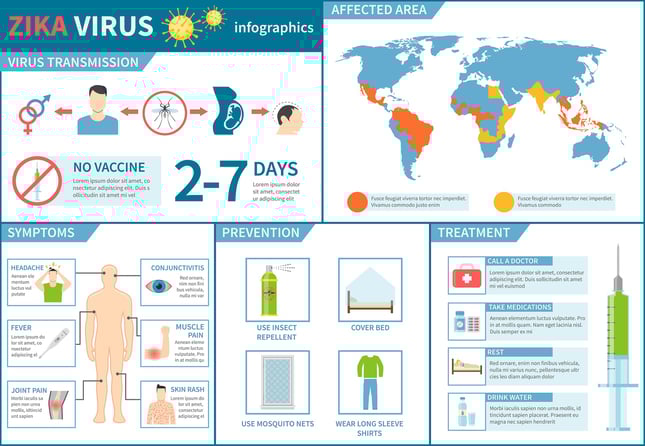
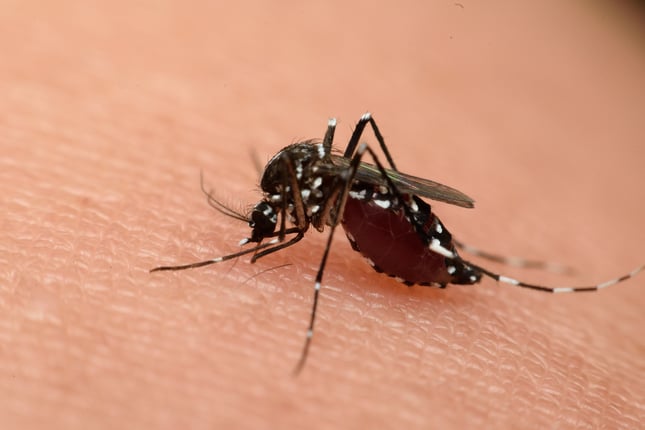
According to the CDC (Centers for Disease Control), Zika virus is a disease spread primarily by mosquitoes, specifically the Aedes species. If a mosquito is infected with Zika, it can transmit the virus to people.
Common symptoms include fever, rash, joint pain and conjunctivitis. In many cases the illness is mild and some people may not realize they are infected.
However, infection during pregnancy can cause a severe birth defect called microcephaly as well as other fetal brain defects.
What Are The Real Risks Associated With The Zika Virus?
The greatest risk is transmission from a pregnant woman to her fetus, which can result in serious birth defects.
There has also been an increase in cases of Guillain-Barré syndrome in areas affected by Zika. This disorder causes the immune system to attack the peripheral nervous system.
Because no vaccine currently exists, prevention is essential.
- Wear long-sleeved shirts and long pants.
- Stay in places with air conditioning or screened windows.
- Take measures to control mosquitoes inside and outside your residence.
- Use mosquito netting when necessary.
- Use EPA-registered insect repellents containing DEET, picaridin, IR3535 or oil of lemon eucalyptus.
- Always follow product label instructions.
- Reapply insect repellent as directed.
- Do not spray repellent under clothing.
- If using sunscreen, apply sunscreen before insect repellent.
- Do not use insect repellent on babies younger than two months.
- Dress children in clothing covering arms and legs.
- Cover strollers and cribs with mosquito netting.
- Do not apply repellent to a child’s hands, eyes or mouth.
- Adults should apply repellent to hands first, then apply to a child’s face.
- Treat clothing and gear with permethrin.
- Follow product instructions when treating items yourself.
- Do not apply permethrin directly to skin.
- Travelers returning from affected areas should avoid mosquito bites for three weeks.
What Threat Does Zika Pose In The United States?
On February 1, 2016 the World Health Organization declared Zika a Public Health Emergency of International Concern. While no local transmission had been reported in the United States at that time, cases among travelers returning from affected regions were expected to increase.
Public health officials recommend removing standing water around homes and businesses, as mosquitoes breed in stagnant water.
What Role Do Cleaning Companies Play In Infection Control?
Although Zika is primarily mosquito-borne, cleaning companies still play an important role in infection prevention.
Current evidence suggests Zika does not spread through surfaces, water or air. However, viruses similar to Zika are susceptible to many common disinfectants.
For this reason janitorial companies should continue to use broad-spectrum disinfectants and proper hygiene practices to help reduce the spread of other infectious diseases.