

Aren’t Cleaning Companies Supposed to Make Your Facility Cleaner?
The whole point of a commercial cleaning service is to make your facility clean and visibly appealing.
Not to make it dirtier.
Yet all too often, janitorial companies use poor methods and inconsistent standards.
Instead of removing germs and bacteria, they can end up spreading them around the building.
One of the leading causes of illness in the workplace is cross-contamination.
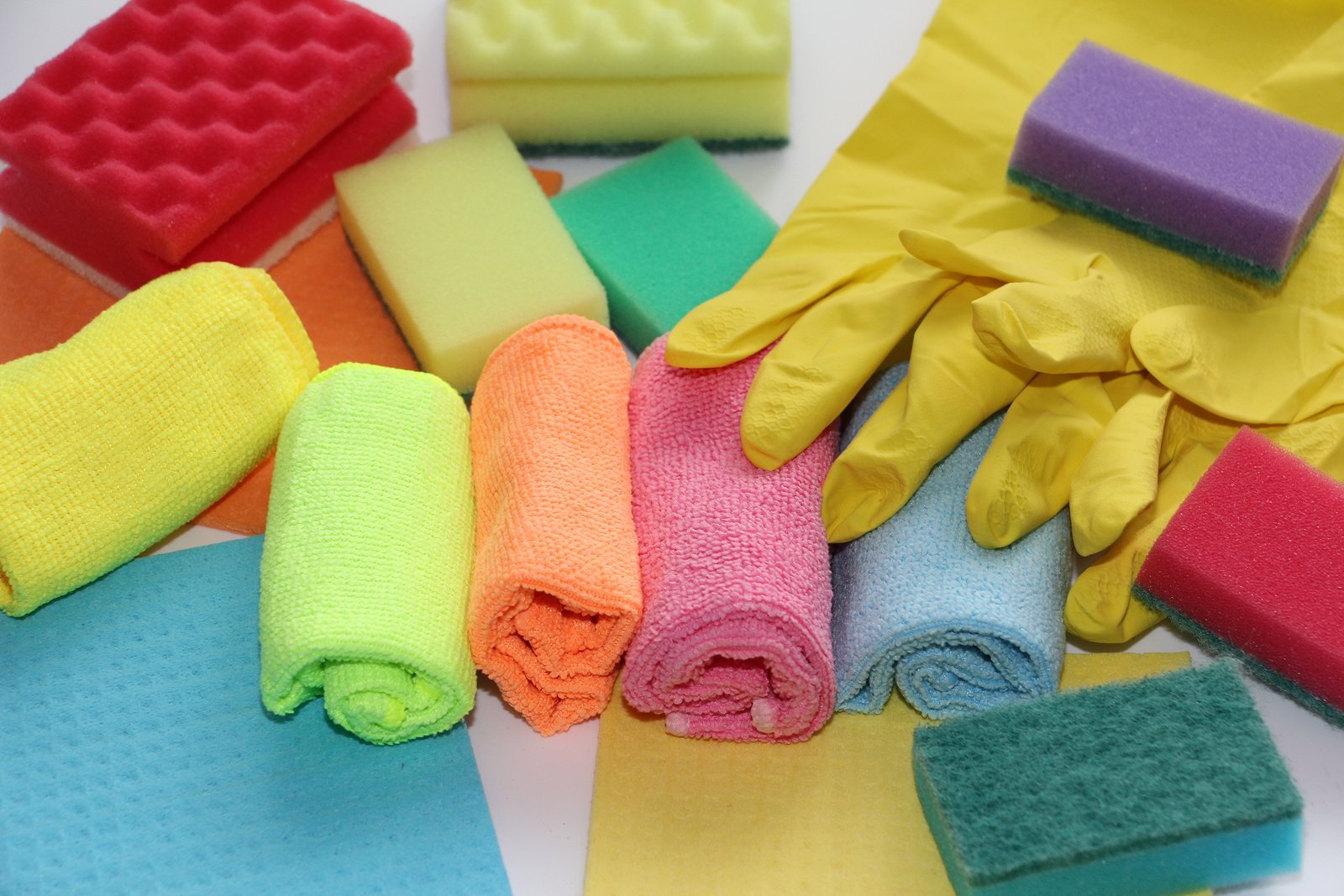
If your cleaning service is not using a color-coded cleaning cloth system to prevent it, they are ignoring industry best practices.
Think about how many shared surfaces your staff touches every day.
Computer mice, door handles, phones, kitchen counters, and conference room tables are all “hot spots.”
If a cleaning crew wipes one high-risk area and then immediately wipes another surface with the same cloth, bacteria can be transferred.
That’s how contamination spreads without anyone noticing.
And the result is never good.
It can lead to lower productivity, more absenteeism, and a noticeable decline in workplace health.
If your commercial cleaning company ignores basic prevention steps like this, it’s a major red flag.
In many cases, it’s a sign that it may be time to consider a more professional cleaning partner.
Is Your Office Cleaning Company Using the Same Rag to Wipe the Toilet & Your Lunch Tables?
It’s easy to grab the office phone or use your mouse without thinking twice.
But those surfaces can hold germs for hours or even days.
A simple way to reduce risk is to require a color-coded rag and tool system in your facility.
It’s one of the easiest and most affordable ways to reduce cross-contamination.
Designating tools like rags and mop heads for specific zones helps prevent cross-contamination from spreading across your workplace.
The concept is simple.
Assign one color for high-risk areas, and separate colors for general cleaning, sinks, mirrors, and food-related spaces.
For example, you might use:
Red for restrooms and high-risk areas.
Yellow for sinks, mirrors, and lower-risk restroom tasks.
Blue for general cleaning and dusting.
Green for kitchens, break rooms, and food-related surfaces.
You don’t have to use these exact colors.
But having a visual system makes it easy to prevent mistakes and enforce proper cleaning habits.
It Is Simple, Cheap & Effective, What Is Not to Love?
Color-coded tools aren’t a secret technique.
They have been a staple of proper janitorial cleaning for years.
If your cleaning company ignores them, you are likely not getting the quality of service you deserve.
It is easy to use and costs very little to implement.
There is really no excuse not to follow this standard.
Cross-contamination contributes to workplace illness, higher absenteeism, and reduced productivity.
A simple visual coding system helps reduce risk while keeping your facility cleaner and healthier.
New System Needs New Trainings
Any new system usually requires training and reinforcement.
But the color-coded towel system is easy to adopt and straightforward to manage.
It simplifies cleaning and makes it more obvious what should be used where.
That said, it still requires supervision and consistency.
A simple chart posted in key areas can eliminate confusion and reduce errors.
Most office building cleaning companies want to protect the health of your facility.
This is one of the clearest ways to do it.
It can also build stronger accountability for cleaning teams by creating a clear sense of responsibility.
Accountability Is Key
A color-coded rag system also gives management a useful visibility tool.
Brightly colored materials make it easier to confirm that teams are following the right process.
You can also learn a lot simply by monitoring supply usage and laundry.
If restroom tools suddenly drop off, it can be a sign that restroom cleaning is being missed or rushed.
That allows you to catch problems early and correct them before they become bigger issues.
This system is not the only quality assurance method you should use.
But it can be a powerful support tool to keep performance consistent.
Partner With a Company that Takes Health & Safety Seriously
A color-coded cleaning system may be a new process for some cleaning providers.
But it is a clear upgrade in terms of health, safety, and reliability.
It is easy to learn, affordable, and highly effective.
Every facility benefits from reducing cross-contamination.
That includes medical cleaning, school cleaning, and general office cleaning.
If you want a healthier workplace and a higher standard of service, require a color-coded cleaning system.
At Stathakis, we use a color-coded cloth system company-wide.
It helps reduce the risk of cross-contamination and supports consistent, health-conscious cleaning practices.

%20(1)%20(1).png)